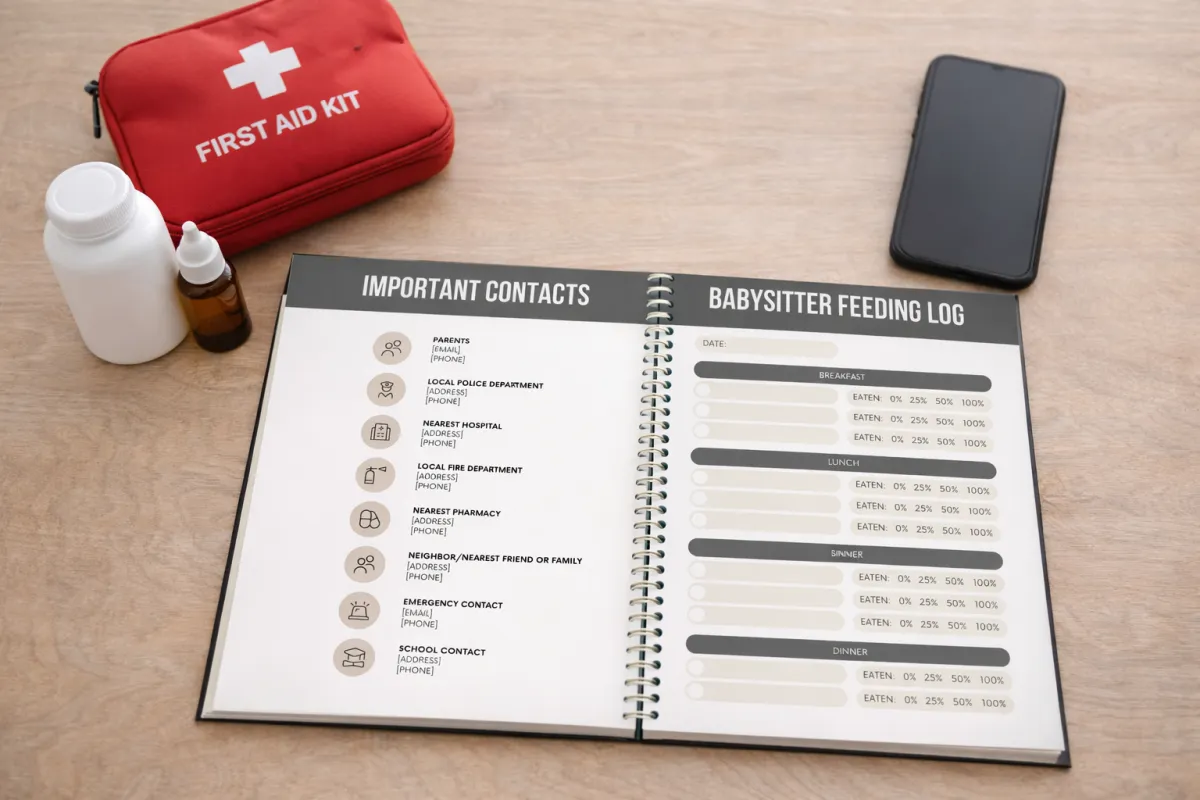
How a Babysitter Planner Improves Child Safety (Even When You’re Not Home)
Every parent hopes they’ll never get that phone call — the one that starts with, “Something happened.”
While we can’t prevent every scraped knee or unexpected moment, we can control how prepared everyone is when parents aren’t home. And that preparation makes all the difference.
A Babysitter Planner isn’t just an organizational tool. It’s a child safety system — one that quietly works in the background to protect your child, guide caregivers, and reduce panic when something feels off.
Here’s how a Babysitter Planner significantly improves child safety, even when you’re miles away.
Support Your Babysitter With Clarity
Safety Starts With Written Information, Not Memory
In stressful situations, memory becomes unreliable. Babysitters shouldn’t have to remember instructions given days or weeks ago — especially when a child is hurt, sick, or distressed.
A Babysitter Planner ensures that:
Critical information is always accessible
Instructions are clear and consistent
Caregivers can act confidently instead of hesitating
Safety improves when decisions don’t depend on recall alone.
Clear Medical Information Saves Precious Time
One of the most powerful safety features in a Babysitter Planner is its medical information section.
When allergies, medications, and reactions are clearly documented, babysitters don’t have to guess or search for answers.
This includes:
Known allergies and severity
Medication names, dosages, and timing
Pediatrician contact information
Important medical notes
In urgent situations, seconds matter. Written clarity can prevent dangerous delays.
Emergency Protocols Reduce Panic
Babysitters are often young or caring for multiple responsibilities at once. In emergencies, panic is natural — unless there’s a plan.
A Babysitter Planner clearly outlines:
When to call parents
When to call emergency services
Who to contact if parents are unreachable
Consent-to-care authorization
This removes uncertainty and empowers babysitters to act quickly and responsibly, instead of second-guessing themselves.
Household Safety Rules Prevent Accidents
Many accidents happen not because of negligence, but because of unclear boundaries.
Your planner’s household safety section helps prevent issues by documenting:
Off-limit rooms or areas
Indoor and outdoor play rules
Security system instructions
Locked door and supervision requirements
Locations of first-aid kits and fire extinguishers
When babysitters know exactly what’s allowed, they’re far less likely to unintentionally create unsafe situations.
Behavior Guidelines Support Emotional Safety
Safety isn’t only physical — it’s emotional too.
Children who feel overwhelmed, overstimulated, or misunderstood are more likely to melt down, act out, or put themselves at risk.
By documenting:
Behavior triggers
Preferred discipline approaches
Comfort strategies
Emotional support techniques
You help babysitters respond with empathy instead of frustration, keeping your child emotionally regulated and secure.
Daily Logs Create Accountability and Transparency
Daily logs may seem simple, but they play a powerful safety role.
They allow caregivers to track:
Meals eaten
Sleep and nap patterns
Potty or diaper changes
Medications given
Incidents or concerns
This creates a written record that protects everyone — child, babysitter, and parent — and ensures nothing important slips through the cracks.
Incident Reports Encourage Honest Communication
When something does happen, documentation matters.
Incident report forms:
Normalize reporting small injuries or concerns
Encourage transparency
Help parents spot patterns over time
Reduce fear or guilt around disclosure
A planner makes it clear that safety isn’t about blame — it’s about awareness and care.
Prepared Homes Create Safer Outcomes
The safest babysitting environments aren’t perfect — they’re prepared.
A Babysitter Planner transforms safety from a hope into a system:
Information is written
Expectations are clear
Protocols are documented
Communication is built in
And when caregivers feel prepared, children are safer.
Peace of Mind Is a Safety Tool Too
Parents often underestimate how much safety improves when they feel calm.
Knowing that:
Instructions are documented
Emergencies are planned for
Communication is structured
allows parents to step away without lingering anxiety — and that confidence carries through to everyone involved.
Safety Isn’t Reactive — It’s Planned
A Babysitter Planner doesn’t wait for something to go wrong.
It quietly prepares for the moments we hope never happen — and ensures that if they do, everyone knows exactly what to do.
Because protecting your child doesn’t stop when you walk out the door.
When expectations are written down, babysitters feel supported — and children feel safer. The Babysitter Planner helps create that shared sense of confidence.
